Latest News

    Featured Posts

    Social Icons

Loading...

The Revolution Has No Tribe: Poem by Dike Chukwumerije

THE REVOLUTION HAS NO TRIBE

Do you not know that poverty is not an Ijaw man?
He will not spare the rest of us and afflict only the Ishan
He will step over the river and come across the border
So, when the drums sound let everybody answer
Do you not know that corruption is not from Nekede?
He will not hear that Ife had no dealings with Modakeke
He will wake up all of our children at might with hunger
So, when the drums sound, let everybody answer
Do you not know that HIV/AIDS is not Kanuri
He will not select his victims and kill only the Fulani
He will set the land ablaze from the delta to the sahara
So, when the drums sound, let everybody answer
Do you not know that our enemies have no face?
They are indigenes no state, they come from no place
And, if this boat capsizes every one of us will go under
So, when the drums sound, let everybody answer
Do not say, “I am an iroke”, when the forest is burning
Do not say, “I am an obeche”, when the forest is burning
Our differences will not prevent us from perishing together
So, when the drums sound, let everybody answer
———————————————–

Poem of the Day: School's Out by WH Davies


"School's Out" may have been Alice Cooper's first big hit single but did you know it's also the title of a poem by a Welsh poet born in 1871? If you left school a few decades ago, you're probably more familiar with the poet as the author of "Leisure", with its famous opening couplet: "What is this life if, full of care, / We have no time to stand and stare." No doubt "Leisure" was once, for many young people, their first encounter with printed poetry. The author, of course, isWilliam Henry Davies, sometimes nicknamed "the tramp poet".

So this Poem of the week welcomes anybody who can remember what Alice Cooper described as one of the best moments in life: "the last three minutes of the last day of school when you're sitting there and it's like a slow fuse burning."
OK, you have to go back after Easter, but for now, children, School's Out.
School's Out
Girls scream,
    Boys shout;
Dogs bark,
    School's out.
Cats run,
    Horses shy;
Into trees
    Birds fly.
Babes wake
    Open-eyed;
If they can,
    Tramps hide.
Old man,
    Hobble home;
Merry mites,
    Welcome.

THE END.
CC: The Guardian.

I am the Poet Davies, William written by William Henry Davi


I am the Poet Davies, William,
   I sin without a blush or blink:
I am a man that lives to eat;
   I am a man that lives to drink.

My face is large, my lips are thick,
   My skin is coarse and black almost;
But the ugliest feature is my verse,
   Which proves my soul is black and lost.

Thank heaven thou didst not marry me,
    A poet full of blackest evil;
For how to manage my damned soul
   Will puzzle many a flaming devil.


THE END.


From "A Poet's Pilgrimage", (1918).

ARTLESSNESS by Hannatu Adamu

And it was one of the silliest stories ever told
From beginning to end, it made no sense
It could be that trouble is already a-brewing
With or without pride and fortune
Imagine, the dog has two tails!
The leaves have begun to dry
It didn’t fit, so they had to resize
Children will forever be curious creatures
There is no use crying over spilt milk
Whatever happened to morality, faith and hard work?
There is no telling how many are already in the know
Misery is now a thing of the past
There is a list of all the features
Culture provides refuge
Many have been there, but none ever came back
A doctor’s life is an honourable one
It is hard to tell what is happening
For the love of art, please listen
Somehow, this mess must be unraveled
That’s what partners are for
Only the title is needed
They confess their ignorance
Many wonder at the aftermath
No two men are alike in personality
Last time, an ugly calamity befell them
Like it or not, what will be, will be
Queue up and be handed a whip each
If there ever was such a thing as trust
Then, water would certainly not cook fish!
To sing lovely songs in persuasion
Whatever gained thereof is legal
A tale as tall as Mount Everest
Lives will never be the same again
Now, Michael Chrichton must be right:
Artlessness truly is the most difficult art
The story does make sense after all!

OKWESILIEZE (He Who Is Destined To Be King by Dike Chukwumerije)


Okwesilieze
Today I saw a mysterious thing
A thing that vexed me to my very soul
I saw the black man dressed like a king
But crouching in the shadows with a begging bowl
His children were starving in fields of cassava
Dying of diseases the palm kernel can cure
Homeless in a land of rock and timber
“Why are you begging?” He said, “I am poor.”
Today I saw a mysterious thing
A wonder so great I cannot tell it
I saw the black man dressed like a king
But lying in the dust, crying at my feet
His legs were sturdy like the palm tree
His forests were rich and teeming with game
His muscles, they rippled like the proud Zambezi
I told him, “Get up!” But he said, “I am lame.”
Today I saw a mysterious thing
So shocking I have no words to say
I saw the black man dressed like a king
But standing like the lost by the highway
He huddled in a cage that had no gate
He could see where the keys to his chains were kept
He stood in clamps but they had no weight
“Why are you here?” He said, “I am trapped.”
Today I saw a mysterious thing
How can I tell such a horrible story?
I saw the black man dressed like a king
But sharing a sleeping mat with poverty
His poverty was a fat man with a bulging stomach
Lying on his back beside a pot full of treasure
This conviction was all that he lacked:
That he could get up and make his own future.
from the collection, “The Revolution Has No Tribe: Contemporary Poetry on African History , Culture and Society” available at Silverbird Bookshop and also on-line on Amazon.
AUTHOR PROFILE
Dike Chukwumerije
Dike Chukwumerije
Dike Chukwumerije (Dike-Ogu Chukwumerije) is an Abuja Literary Society (ALS) Poetry Slam Champion, and the winner of the maiden edition of The African Poet Nigeria (TAPng) National Poetry Slam Competition.
He is a literary advocate and a dedicated social activist, whose passion for change finds expression in his works.He has self-published several books, including the highly acclaimed poetry collection, “The Revolution Has No Tribe: Contemporary Poetry on African History, Culture and Society”.
One of his novels, “The African American”, was long-listed for the 2012 Wole Soyinka Prize for Literature.
Dike’s other poems are available at http://www.therevolutionhasnotribe.blogspot.com/
He lives in Abuja with his family.
What is mine to do, is always done.


"Richard Cory "- Poem By EDWIN ARLINGTON ROBINSON


Whenever Richard Cory went down town,
We people on the pavement looked at him:
He was a gentleman from sole to crown,
Clean favored, and imperially slim.

And he was always quietly arrayed,
And he was always human when he talked;
But still he fluttered pulses when he said,
“Good-morning,” and he glittered when he walked.

And he was rich — yes, richer than a king —
And admirably schooled in every grace:
In fine, we thought that he was everything
To make us wish that we were in his place.

So on we worked, and waited for the light,
And went without the meat, and cursed the bread;
And Richard Cory, one calm summer night,
Went home and put a bullet through his head.


About the Poet
EDWIN ARLINGTON ROBINSON (1869-1935)
Born and raised in a small town in Maine, the American poet Edwin Arlington Robinson (1869-1935) won three Pulitzer Prizes for his poetry. His narrative poems feature characters that are often sensitive, frustrated, and miserable, and even his more lyrical work suggests a kind of quiet disturbance. After his family lost their fortune, Robinson scraped by for years before achieving financial independence.

"Hash Tag" A Poem by Davina Kawuma


Headphones edged with brio,
bulging over skirted sofas.
Sport is the new sex.
Dogs versus coyotes on the tight
end of the stereo.
Hazard lights stitch footsubishis and TV
chicken into seams of Nokia eleven hundred housing.
In loose sprays, cracked for patches
of grey I save English names one cocktail
at a time. Tusky Big Brother Africa house
mates sniff my lemon bracts. I’m middle
middle-class with a chance of un|dress
codes. Raglan sleeves, push-up bras, harem
culottes, wine-glass heels and a backpack full
of silence. I will never wear myself out
trying to get rich.

Hash Tag, YouCantThreatenThePoor

How about it, then?
Shall I serve a late helping of morning;
slop poached pinks and yolky yellows
onto thick slices of doughy landscape?
Shall I take the day off and a bus buried
by a loud pedal to a faded scrawl?
Invite your size-six Adam’s apple to my capacity
building workshop?
Shall I slaughter a mannequin?
Upload the video on YouTube?—YouGroup?—YouThink?
YouCome?—YouGrab?—YouCantOrderFrenchFriesWithThat?
Shall I read you some bumper sticker advice,
im|press you with my flaky fonts and American’t accent?
Save you fifty on a bootlegged DVD?

Hash Tag, TheSystemIsStupid


About the Poet
Davina Kawuma was born in Lusaka and grew up in Kampala. She used to be afraid of poetry but not anymore. She wishes she had written Godhorse, The Laugher, The Blue Bouquet, Black Mamba Boy, Desertion, Perfume and House of Leaves. In her perfect world, she would write novellas during her lunch break and publish them before going to bed. Davina has written articles for African Woman and is working on a collection of short stories.
Deducted from Suubi.


The Visionary Poems Of William Blake


William Blake (1757-1827) was one of the strangest and most difficult to categorize of eighteenth century British literary figures. We are not even sure that “literary figure” correctly describes him, since it was as an illustrator that he primarily earned his bread.

His early life

He came from humble origins as the son of a London hosier. From early youth he was haunted by religious and demonic visions. He claimed to have seen angels, gods, and spirits beginning at the age of four, and thereafter enjoyed a close association with the supernatural.
blake1
As a child he was withdrawn and moody, and lived in a world of his own sensations. At the age of ten, he attended a school for illustrators in the Strand; this was followed by an extended apprenticeship with an engraver. All this time he immersed himself in Romantic poetry, from which he acquired a taste for exotic themes and lush, gothic settings.
It was not long before he began to take up the pen. Unique in the annals of poetry, he illustrated his own written verses with as much ability as he wrote them. His illustrated poems thus comprise a self-contained world, in which the reader finds himself immersed entirely in Blake’s dreamscapes.
He tried to attend the Royal Academy at the age of twenty-five, but was rejected for lack of sufficient academic credentials. How old is the story of genius spurned by the establishment!
blake2
Marriage discovered him at the age of twenty-five as well. His wife, Catherine Boucher, tolerated him about as much any woman could under the circumstances; but moody, visionary geniuses do not often make for good bedfellows. But he was no prude; in fact, he condemned sexual abstinence as a mark of ignorance and repression.
And yet he must have had some redeeming human qualities, for in 1783 two moneyed well-wishers financed the private printing of a volume of his verses named Poetical Sketches. Here was first displayed the main themes of his work: moody mysticism, individuality, and a fiery religious fervor.

An innovator as well

One of the main factors in preventing Blake’s work from reaching a large audience was the financial cost of printing his books: they required both engraved plates as well as regular typescript, as he insisted on illustrating his own volumes.
Inexpensive editions of his works were hard to generate with the printing technology of the day, and so the circulation of his books remained low. Art to him could never be compromised. He would later, however, invent a process of engraving both text and illustrations on the same plate.
By 1784 he had sufficient means to open his own print shop on Broad Street in London. His brother Robert gave him valuable assistance in the beginning, but perished from tuberculosis in 1787.
blake4
The year 1789 saw the publication of Songs of Innocence, which was tinged by religious themes. This was followed in 1794 with Songs of Experience, which contains a personal favorite of mine. An excerpt below gives us a taste of his mystical tendencies:
Tyger, Tyger, burning bright
In the forests of the night,
What immortal hand or eye
Could frame they fearful symmetry?…
And what shoulder, and what art,
Could twist the sinews of thy heart?
And when thy heart began to beat,
What dread hands and what dread feet?
He was an idealist at heart, and believed in the brotherhood of man; the failure of the French Revolution to produce a utopia was a crushing disappointment to him. He was darkly suspicious of science, as he believed it to be a corrupter of faith, as well as an artifice used to oppress the common man.
After 1815 he gradually drifted away from poetry, probably finding that it did little to fatten his purse. His bread and butter remained illustration. He won in 1819 a commission from a wealthy man named John Linnell to illustrate some passages in the Bible and Dante’s Divine Comedy.
While hard at work on this task, he was overtaken by death. By this time he had become an obscure figure, and his funeral passed without notice. For many years the precise location of his grave-site was not known; in 1957, finally, a bronze bust of Blake was erected at Westminster Abbey.

The essence of the man

blake3
He had been so far ahead of his time that his contemporaries had lost sight of him. He distrusted political reactionaries; despised slavery; and believed that the imagination above all must be cultivated as the beating heart of the creative process.
He reminds us vaguely of Blaise Pascal, with the frequency and intensity of his religious visions, and the perhaps untreated medical issues he may have suffered from. No one quite knew how to categorize him.  For many years after his death, his work, like that of Herman Melville in the United States much later, remained forgotten.
The publication of a sympathetic biography of his life in 1863 by Alexander Gilchrist changed all this, and he eventually came to be seen as a key figure in the Romantic movement. His reputation has increased steadily since the twentieth century.
He remains a fascinating figure. No poet before or since has combined such mastery of words and images. His work seems surprisingly modern: the lines of poetry are usually short, the impact is powerful, and the images stay fixed in the mind.
He was an apostle of the imagination, and a testament to the consuming power of a visionary ideal.
Article credit: Return of Kings


Poem- Hash Tag by Davina Kawuma


Hash Tag 
Davina Kawuma

Headphones edged with brio,
bulging over skirted sofas.
Sport is the new sex.
Dogs versus coyotes on the tight
end of the stereo.
Hazard lights stitch footsubishis and TV
chicken into seams of Nokia eleven hundred housing.
In loose sprays, cracked for patches
of grey I save English names one cocktail
at a time. Tusky Big Brother Africa house
mates sniff my lemon bracts. I’m middle
middle-class with a chance of un|dress
codes. Raglan sleeves, push-up bras, harem
culottes, wine-glass heels and a backpack full
of silence. I will never wear myself out
trying to get rich.

Hash Tag, YouCantThreatenThePoor

How about it, then?
Shall I serve a late helping of morning;
slop poached pinks and yolky yellows
onto thick slices of doughy landscape?
Shall I take the day off and a bus buried
by a loud pedal to a faded scrawl?
Invite your size-six Adam’s apple to my capacity
building workshop?
Shall I slaughter a mannequin?
Upload the video on YouTube?—YouGroup?—YouThink?
YouCome?—YouGrab?—YouCantOrderFrenchFriesWithThat?
Shall I read you some bumper sticker advice,
im|press you with my flaky fonts and American’t accent?
Save you fifty on a bootlegged DVD?

Hash Tag, TheSystemIsStupid


Rebooting the System – Poems by Wesley Macheso


Rebooting the System

WARNING: Formatting will erase
ALL data on this disk.
Do you wish to continue?
YES.
Let us delete the system files
containing the raw data for revolution.
Open the control panel
and empty the hard disk drives
of all useful information:
family trees and lineage tracks,
religious beliefs, gods and goddesses,
ancient cultural flowerings
and achievements of their ancestors.
Uninstall or change all programs
pointing to their rich heritage.
Let us change the system properties
and feed the machine new satellite data,
replace the operating system
with an advanced version with better features.
Keep the hardware intact,
maintain the body as black as tar
but corrupt the software entirely.
Let us create in these creatures
advanced aliens far removed.
They who cannot remember their past
will never forge a future.

——————

Undressing Our Mother in Foreign Tongues

Our fathers celebrated her nakedness,
eyes feasting on her sensuous figure
cast against the sound of throbbing drums.
“femme noire, femme obscure”
Dam… da-ram… dam… da-ram… dam…..
Fondling the stars on the night of her skin.

My sisters have exposed her nakedness;
craters dug by the civil war
beneath her firm breasts.
Once stout now famished buttocks,
starved down from the hunger.
Dark lesions against her black skin,
marks of the beast.
My mother’s nudity sells in America.

I, too, was seduced to paint the horror.
Enticed to finger the beads
bedecking my mother’s waist.
The most ambitious of us
ache to split her legs
and bare it all before blue eyes.

——————

Beautiful

In the silhouettes of dark nights
haunted by the silence in the shadows
I take my eyes off his splendour;
he scares me. He is death.
Underneath the night of his skin
are the daggers, the chainsaws, the pangas.
A stream of lies, a crater of regrets.
A gulley of sorrows left by the memories.
His faintly parted lips a rotten smile.
He is war.
There is a forest inside my man.
Tangled threads choking each other.
Tangled roots beaming on the thick of his skin.
There is a dead end,
a schism.
Lifeless avenues littered with dead leaves.
A fire choked in ashes.
A smile for every tear.
Un-furrowed earth churning and groaning.
And you said he was beautiful?

——————

Margarine on Pumpkin

I am
margarine on pumpkin.
Suck me up
or let my yellow melt
intoyouryellow.
Absorb my tide in
your tenderness
and we will make
the sun.
Or the moon
on a night
with no stars.
They say yellow
is not a colour
for babies
but us
will melt into
sunshine.

——————

Picasso on a Rock

These painstaking artistic scrawls
that entice the eye on Mphuzi  hill
are the timeless marks
of those who dug for food and roots.
The clicking tongues of those pigmies
conspired to paint these images
sweet to the unconscious mind.
These red pigments of multiple hues
where celestial objects edge animal shapes
are therapeutic to the soul.
The fury of winter is given life
in the lifeless reflections on this rock.
Those olden settlers were astronomers.
Their unsung meteorological know-how
mocks the legacy of Theophrastus.
Cubism was born here long before Pablo lived.
My unwitting eyes are delighted
by these eternal squiggles on a rock.

—-

Mphuzi  – A hill in central Malawi with rock paintings of the Akafula

——————

Poems © Wesley Macheso

Music Box – Poems by Ehizogie Iyeomoan


Image: bigstock.com

music box

his tongue searched for answers
to the endless questions stuffing her mouth
his fingers played the piano of her body
striking the right cords as he ran
a combination of black & white keys
till he finds a balance–an equilibrium
she teased the ivory of his neck
with warmness and moisturizing air
filling his ears with desires & soft songs
————–

a bush fire burning within me

there is a bush fire burning within me
and I wish you could put it all out with
the shining waters like rivers on your lips
a fourteen or fifteen seconds kiss or more will
do
the miracle—the magic—the healing—the
rescue
will my lips ever marry yours on earth, or
should I wait
till a trumpet sounds for an eternal marriage in
heaven
will this fire—this insatiable desire even burn
out completely
and become ash and old time memories?
————–

a thick blue film of love & loss

suddenly i want to cry and smile–all at once like
sun and rain filming sky & earth–a single silver
film.
suddenly i want to cry & cry & cry and
pray nobody tries to hold it back
hold back the rain in my eyes from dropping.
i want to wash my feet and heart with those
warm tears.
salt water is good for cracking soles and the
heart too, doctors say.
so i want to teach myself to mourn and to
gap the thin transparent line between love and
loss.
i want to cry & smile & cry as i roll on
the mud floor to erase your name from history.
i want to cuddle me and rock myself to sleep
and
try to forget you ever lived in my head
try to forget you once fed my stomach butterflies
and scorpions
once stuffed my lungs joy and grief
once filled my head blood and bedtime desires.
i want to forget you like a 15 b.c. once-upon-a-
time story as
i rock my pillow and me to dreamland
on a bed of roses by the seacoast where
the colours of love and loss merge into one–
thick blue film
and my memory of you blues out
————–
Poems: © Ehizogie Iyeomoan
Image: Bigstock.com

The Eye of Poetry, A Poem

Poetry is the school I will never graduate from
because no matter how hard – I try
I will never tell it all – the secret way of its patterns
And how the same letters form different syllables to form different words,
And how they fall – in front or behind one another, and if re-arranged would create a whole different story...
It is how emotions run High – Low – Calm – Serene
Vivacious, like the sun at noon, surreal like the fantasy it promises
You never know when poetry goes subtle or quiet. How even when there,
It grows deep like a river that bleeds  when the dry earth has sucked out her waters...poetry...

It is the bird song I cannot articulate

The trickle of the tap in a porcelain sink
The whoosh of the wind that makes my skin stand on end
That thing that knocks the breath out of my lungs
The music in you, unsung, yet so fervent you tingle within
The notes in the air unwritten on sheets. Tangible, intangible, whatever you please

It is useless to try to fathom how,

Without seeming to say much, it says so much,
How it clings to you like the little hand of a small child begging you to stay
Or, like the sticky filmy strands of the spider whose web you never see – but,
You walk right into anyway...

It is the sweet tangle between fantasy and realism

And metaphysics and apathy and breath and death
But do not worry if the opposites don’t quite match or get criss-crossed right:
The rhythms do not always match...
see, there in disorder exists the same beauty eminent in order,
I have come to learn, That free verse, sonnet, haiku, list, and lyrical when tweaked just right Are like a violin in the hands of a skilled violinist: so many songs from the tip of one bow

I live, breathe, dream poetry, in syllables so sweet they tantalise my mind

Tie and untie my tongue so I have no choice but try to tell of its complexity,
Of all the stories that are spun like the silky strands of Ananse’s tales
And the flighty cunning of a hare’s escapades...
I laugh so hard tears kiss the corners of my eyes,
I learn lessons that might have remained unlearnt had they been in plain black or white

See, the twists are new with every turn

Like a child’s wheel let loose and thrashing through bushes
Like heavy raindrops never knowing their mark –
Like the water in a lake that flows in itself and never knows where it ends and or where it begins...
yes it is that meld...

...the sublime, the divine...that you never touch

Yet you know how it feels...
It is the beauty you want to explain but words are always inept to describe
It is poetry...existent in as many exquisite and intrinsic patterns
As there are on a peacock’s tail:

While she sits, her iridescent plumage dazzles us,  

And when she fans her tail, we see her eye... 
Hypnotically beautiful...spiralling into the magical chasm of poetry... 
Do you see the eye of poetry? 

By Lilian A. Aujo.
   
 The Poet:  Lillian Akampurira Aujo is from Uganda and holds a Bachelor’s Degree in Law from Uganda Christian University, Mukono. Her work ‘Soft Tonight’ was awarded first prize in The Beverley Nambozo Poetry award. The writers she admires include, Arundhathi Roy, Zukiswa Wanner, Rotimi Babatunde, Leila Aboulela, Lola Shoneyin, Chimamanda Ngozi Adichie and Gabriel Garcia Marquez. Lillian is currently working on a poetry and short story collection.

Deducted from: Suubi. A collection of short stories and poems from the African Writers Trust’s creative writing programme produced in association with the British Council 


Good Morning!

     A Greeting


      GOOD morning, Life--and all
      Things glad and beautiful.
      My pockets nothing hold,
      But he that owns the gold,
      The Sun, is my great friend--
      His spending has no end.

      Hail to the morning sky,
      Which bright clouds measure high;
      Hail to you birds whose throats
      Would number leaves by notes;
      Hail to you shady bowers,
      And you green field of flowers.

      Hail to you women fair,
      That make a show so rare
      In cloth as white as milk--
      Be't calico or silk:
      Good morning, Life--and all
      Things glad and beautiful.

      Poet: W.H. Davies
      Have a Beautiful Thursday.


Poetic Tuesdays, The Road Not Taken


I took time to present this poem today late at night, because it has an introspective and  meditative perspective. One that will put you  in contemplation after the long day's haul. Take your time to scroll down gently with muse.

The Road Not Taken
Two roads diverged in a yellow wood,
And sorry I could not travel both
And be one traveler, long I stood
And looked down one as far as I could
To where it bent in the undergrowth;

Then took the other, as just as fair
And having perhaps the better claim,
Because it was grassy and wanted wear;
Though as for that, the passing there
Had worn them really about the same,

And both that morning equally lay
In leaves no step had trodden black
Oh, I kept the first for another day!
Yet knowing how way leads on to way,
I doubted if I should ever come back.

I shall be telling this with a sigh
Somewhere ages and ages hence:
two roads diverged in a wood, and I --
I took the one less traveled by,
And that has made all the difference.
                                          ROBERT FROST.

Synopsis
Everyone has to choose his 'way' in life: when he does, it may not seem much more important than other 'ways' he might have taken--but it will make all the difference.
Choose a path tonight and your footprints will simply leave the mark that you were here.

Good night buds. :)


Top 10 Greatest Epic Poems

Ancient poetry has in no doubt been the foundation of the both oral and written poetry. These poets all made a mark in literature and still outplay the modern poetry which at times seems to leave out the basics of writing poems. This list is a selection of the most prestigious and eminent epic poems from before the 20th century.  In other words I have left 20th century poetry for another list.

10. Aeneid     
       Virgil
“The Aeneid” (Lat: “Aeneis”) is an epic poem by Vergil (Virgil), the pre-eminent poet of the Roman Empire.  It is written in dactylic hexameter (considered to be the Grand Style of classical poetry). The first six of the poem’s twelve books tell the story of Aeneas’ wanderings from Troy to Italy, and the poem’s second half treats the Trojans’ ultimately victorious war upon the Latins, under whose name Aeneas and his Trojan followers are destined to be subsumed.Virgil was still working on revising the Aeneid when he died in 19 BC. The poem contains a few lines which are only half as long as they should be, which confirms thdwee traditional belief that the work is unfinished. The poem is not, however, incomplete; it was meant to end where it ends. The tradition also says that Virgil was so dissatisfied with the Aeneid that on his death bed he gave orders for the manuscript to be burned, but the executors of his estate did not comply.
It was basic to the education of generations of Romans, and has stirred the imaginations of such writers and artists as St. Augustine, Dante, Milton, and countless others. 

9. Don Juan
     Lord Byron
Byron's satirical masterpiece Don Juan is written in groups of eight lines of iambic pentameter that follow an ABABABCC rhyme scheme, which is known as ottava rima. The dedication, sixteen cantos, and fragmentary seventeenth canto make up the poem, which Byron insisted was unfinished. Unfortunately, Byron died shortly after the publication of the last cantos and was therefore unable to complete the entire mock epic. Byron claims that he had no ideas in his mind as to what would happen in subsequent cantos as he wrote his work. Byron’s Don Juan, the name comically anglicized to rhyme with “new one” and “true one,” is a passive character, in many ways a victim of predatory women, and more of a picaresque hero in his unwitting roguishness. When the first two cantos were published anonymously in 1819, the poem was criticised for its “immoral content,” though it was also immensely popular.

8. Paradise Lost
    John Milton

https://encrypted-tbn3.gstatic.com/images?q=tbn:ANd9GcSVD8jCOSU0tm1l0Kok6hSwGC5OVxuxOIEhhGdrVaUDh7gynlaQLg
Paradise Lost (1667, 1674) is an epic poem by the 17th century English poet John Milton. The poem concerns the Christian story of the fall of Satan and his brethren and the rise of Man: the temptation of Adam and Eve by Satan and their expulsion from the Garden of Eden. Paradise Lost is the first epic of English literature written in the classical style. John Milton saw himself as the intellectual heir of Homer, Virgil, and Dante. This is an epic poem in blank verse. It was originally published in 1667 in ten books; a second edition followed in 1674, redivided into twelve books (in the manner of the division of Virgil’s Aeneid) with minor revisions throughout and a note on the versification.  The poem grapples with many difficult theological issues, including fate, predestination and the Trinity.

7.  The Divine Comedy     
      Dante Alighieri 

Dante’s The Divine Comedy is the beginning of Italian literature and the single most significant work of the Middle Ages because its allegory emphasizes the importance of salvation and divine love in a work that is inclusive and tightly structured. 
The Divina Commedia (Italian for "divine comedy") is Dante’s masterpiece and is the best literal expression of medieval culture. The poem is written in the first person, and tells of Dante’s journey through the three realms of the dead, lasting during the Easter Triduum in the spring of 1300. The Roman poet Virgil guides him through Hell and Purgatory; Beatrice, Dante’s ideal woman, guides him through Heaven. Dante’s main purpose in writing the Commedia was to preach the necessity of a moral and religious renew for everybody, in order to get ready for the after-life and to ascend to Heaven, eternally saved. Dante acts as a prophet who speak in behalf of God to the whole mankind. In this sense, he’s strongly medieval and his poem is the higher expression of this culture.

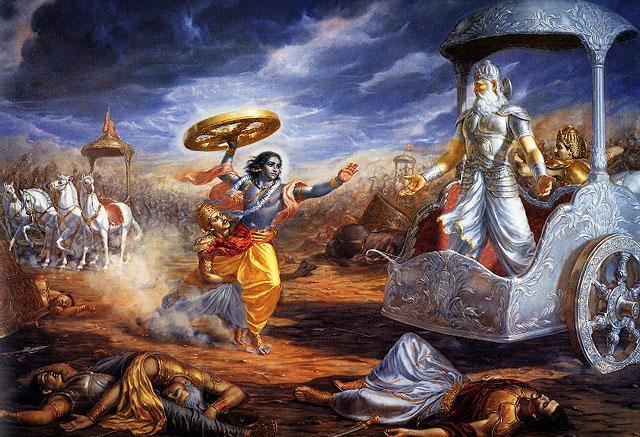
6. Mahabharata    

     Vyasa
http://listverse.com/wp-content/uploads/2008/07/mahabharata-war.jpg
Mahabharata is an ancient historical work written in sanskrit by Krishna-Dvaipayana ( aka veda vyasa). The Mahabharata is not a mere epic; it is a romance, telling the tale of heroic men and women, and of some who were divine; it is a whole literature in itself, containing a code of life, a philosophy of social and ethical relations, and speculative thought on human problems that is hard to rival. It contains more than 74,000 verses, long prose passages, and about 1.8 million words in total. The book's popularity is such that it has run into forty two reprints.

5. Beowulf     
    Anonymous
https://encrypted-tbn2.gstatic.com/images?q=tbn:ANd9GcScBBRUfr5JIqa6GIQGAgJYU6PyJQeUcp6XS-4Bk6srrPvVNkyCyA
Beowulf probably was composed in England sometime in the eighth century ad and written down circa 1000 ad by a literate scop (bard) or perhaps a Christian scribe who was possibly educated in a monastery. The poem was created in the oral-formulaic tradition (or oral poetic method), probably developing over a period of time with roots in folk tales and traditional stories until a single, very talented poet put it in something very near its current form.
Beowulf is written in Anglo-Saxon, the language spoken in Britain before the Norman Conquest in 1066—that is, before the extensive influence of French on the language we speak today. Still, Beowulf has come to be recognized as the foundational epic of English and British culture, in much the same way that the Iliad and the Odyssey are the foundational epics for ancient Greece.

4.Metamorphoses   

   Ovid
Biblis-Adjusted
Metamorophoses” (“Transformations”) is a narrative poem in fifteen books by the Roman poet Ovid, completed in 8 CE. It is an epic (or “mock-epic”) poem describing the creation and history of the world, incorporating many of the best known and loved stories from Greek mythology, although centring more on mortal characters than on heroes or the gods. It is a classical work best known to medieval writers and thus having a great deal of influence on medieval and Renaissance poetry.

3. The Odyssey     
     Homer
Large Odyssey
This is one of the greatest work of literature to be written and attributed to the blind poet Homer. It is written predominantly in Dactyllic Hexameter: each line consists of six metrical feet, each of which consists of a stressed syllable followed by two unstressed syllables. By no means are dactyls used exclusively. Odyssey is anbepic mythological journey of the Greek hero Odysseus (Ulysses in Roman).  It is based on his departure to the Trojan war and the events that followed on his return. Homer’s style is famous for its flow and pacing.

2. Epic of Gilgamesh

     Anonymous
Gilgamesh&Ishtar
The Epic of Gilgamesh is, perhaps, the oldest written story on Earth. It comes to us from Ancient Sumeria, and was originally written on 12 clay tablets in cunieform script. It follows the story of Gilgamesh, the mythological hero-king of Uruk,(somewhere between 2750 and 2500 BCE) and his half-wild friend, Enkidu, as they undertake a series of dangerous quests and adventures, and then Gilgamesh’s search for the secret of immortality after the death of his friend. It also includes the story of a great flood very similar to the story of Noah in "The Bible" and elsewhere.
Research also indicates that Gilgamesh was a real-life king of Uruk, a city-state in Mesopotamia, in about 2700 BC. After his death, unidentified authors and storytellers presented accounts of his life that grew into legends that greatly exaggerated his powers—so much so that he was described as two-thirds divine and one-third human. 
Between 1400 and 1200 BC, an author of the priestly caste read the tablets about Gilgamesh and compiled the stories about him, taken mostly from the Akkadian accounts, into a single work. His name was Sin-leqi-unninni. Although he retained much of the wording on the clay tablets, he made some revisions and introduced original wording of his own.

1. The Iliad
     Homer
Achillesambrosianiliad
Written in the mid-8th Century BCE, “The Iliad” (Gr: “Iliás”) is usually considered to be the earliest work in the whole Western literary tradition, and one of the best known and loved stories of all time. Through its portayal of the epic subject matter of the Trojan War, the stirring scenes of bloody battle, the wrath of Achilles and the constant interventions of the gods, it explores themes of glory, wrath, homecoming and fate, and has provided subjects and stories for many other later Greek, Roman and Renaissance writings. The meter (rhythmic pattern of syllables) of Homer’s epic poems is dactylic hexameter.
The Iliad was a truly remarkable accomplishment. Even though its author had no similar literary model on which to base his work, he wrote a masterpiece that ranks with the greatest works of all time. No student of literature can ignore Homer. No writer's education is complete unless he has read Homer.


Powered by Blogger.
Back To Top